

The Hidden Revenue Stream: How Gift Cards and Add-Ons Boost Your Bottom Line
The Overlooked Opportunity Most studio owners spend their energy filling classes and booking appointments. That’s the core revenue, so it makes...

In an earlier post I talked about how to conduct an analysis to determine your business’ competitive advantage. Today I’ll dive more into what to do with your results. Afterall, it doesn’t matter if you know what your advantage is if you aren’t using it.
Understanding your analysis
The last post covered how to frame your analysis and some questions to consider as you organize your results. Now we’ll talk about what those questions actually mean for your business.
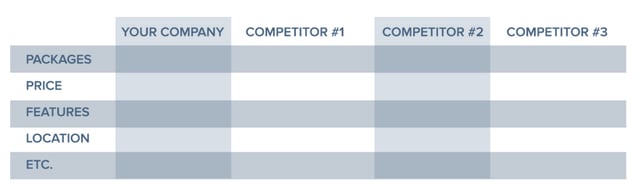
These are the questions we recommended for your consideration, and here's why they matter. Each one is designed to give you insight into a part of your or your competitor’s business.
What are elements that stand out for each business?
Is your business the only one in your area that offers every 5th class free? Or the one that offers the best package deal for families? Now we’re getting closer to your competitive advantage. Find what makes your business stand out, and make it shine in your communications with clients. Clients need to know why your business is the best.
Which elements might you consider emulating in your own business?
Knowing your competitors’ advantages are as important as understanding your own. Figure out what sets your competitors apart and consider ways to emulate their strategy in your own business. If you start doing that thing well too, it will no longer be an advantage for someone else.
Which elements do your competitors do well that you can improve upon in your own business?
Like I mentioned, there are going to be a lot of similarities between your business and those of your competitors. Don’t let one of these similarities become an advantage for someone else. As much as we may not want to admit it, our competitors have great ideas sometimes. Are they using a process that works better than your own? Adopt those strategies for yourself.
Which elements do your competitors not do well?
Can you identify something that your competitors don’t do well?
It’s likely something that is already causing their clients pain. You can take advantage of this. Whatever that thing is, make your business great at it and then use it as a way to stand out. Pro tip: social media is a great place to look to find out how clients feel about a product or service.
You’ve analyzed your results. Now what?
Take action! Your analysis will reveal more than just what your and your competitor’s advantages are. You’ll find out why clients sign up for your classes rather than your competitors. Capitalize on this, and you’ll see an increase in sign-ups and revenue. Fix an area of your business that might be frustrating clients, and you’ll see an increase in retention rates.
The competitive analysis acts as a guide, letting you know what areas of your business work well and which need improvement. But deciding how to make those improvements is on you. Sometimes the action needed after competitive analysis is obvious–for example, if you discover that you are charging too much for classes compared to your competitors, lower your prices to a more competitive rate. Other times the problem is more complicated and requires a creative solution that’s unique to your business.
The market and your competition are always changing, so it’s important to conduct competitive analyses often. Take action based on your results and your business will thrive. Clients want to go to the best business where they’ll get the best service and the best results. Use your advantages to make your business the obvious choice.

The Overlooked Opportunity Most studio owners spend their energy filling classes and booking appointments. That’s the core revenue, so it makes...

Protect your business and client data from unauthorized access with multi-factor authentication—a critical security layer that goes beyond passwords...

 Monica B.: Jul 20, 2023
Whether you run a fitness studio, yoga center, or any other membership-based business, managing registrations, payments, and customer data can be...

 Katie Zacharkiw : May 16, 2017
Your clients are your number one focus, and rightly so–after all, they’re the reason you started your business. But if you aren’t also keeping an eye...

 Danica : Jan 28, 2016
Customers get first dibs on your attention. But who else should be on your radar? If you don’t know your competition very well, you’ll be...

 Trevor Elston : Dec 20, 2018
Quickly accessing data is a crucial element in making sound decisions for your business. But when you’re a busy owner, you don’t have time to spend...